Author name: fstindia

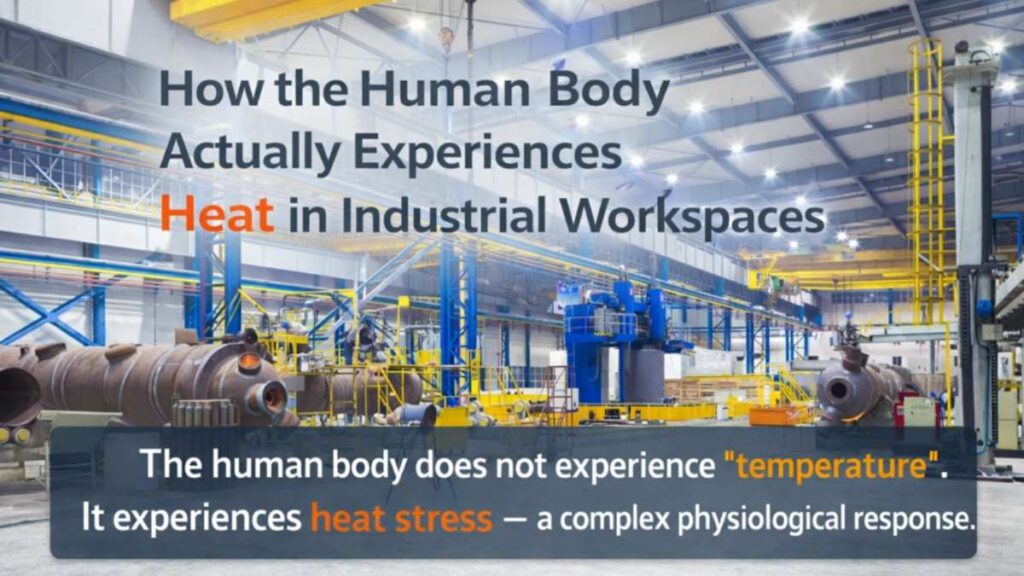
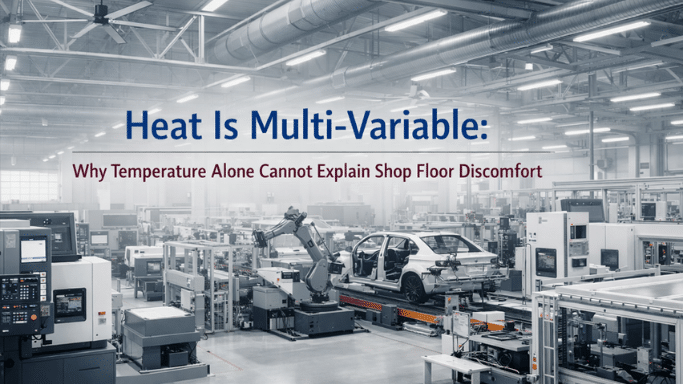
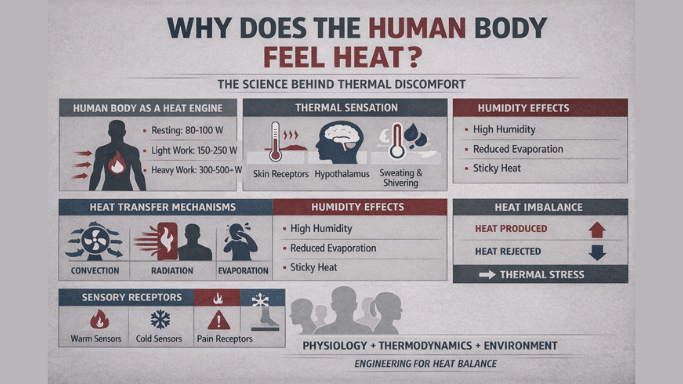
Human perception of heat is not governed by air temperature alone. It is the result of a complex interaction between human physiology, heat transfer mechanisms, neuro-sensory signaling, and environmental boundary conditions.

Why Does the Human Body Feel Heat?

A Physiological, Thermodynamic & Environmental Engineering Perspective Human heat sensation is not determined by air temperature alone. Instead, it emerges from a complex interaction between human physiology, heat transfer mechanisms, neuro-sensory signalling, and environmental conditions. This article explains—at a fundamental level—why the human body feels heat, how that sensation is generated, and why cooling strategies […]

Why Does the Human Body Feel Heat? Read More »

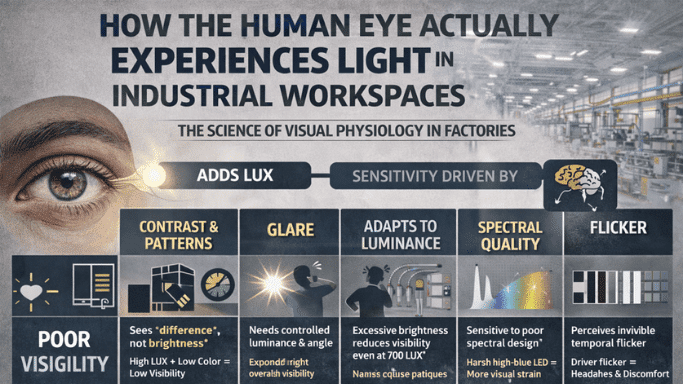
industrial lighting design framework for factory productivity and safety

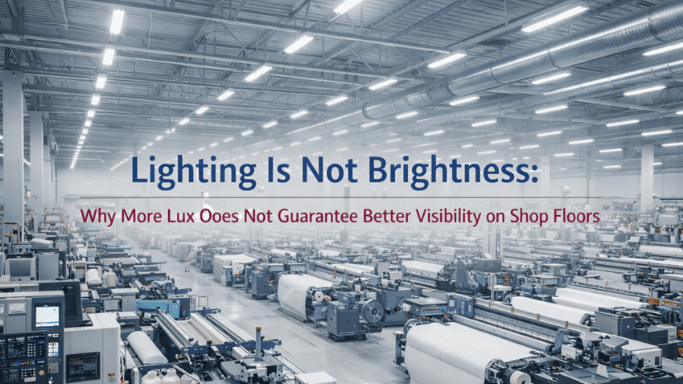
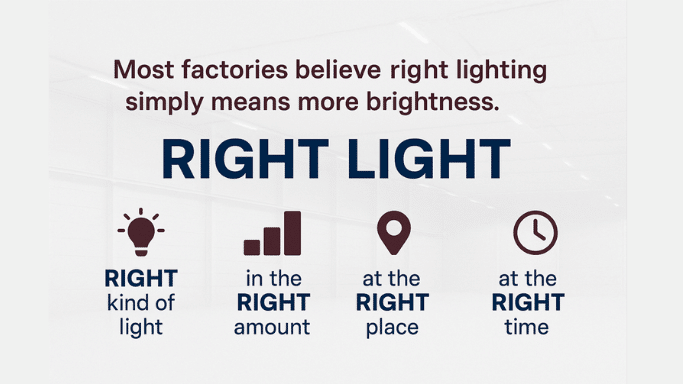
RIGHT Lighting for Industries: A Practical Framework That Actually Works

Effective industrial lighting design determines how accurately tasks are performed, how comfortable workers feel, and how efficiently operations run on the factory floor. In most industrial facilities, lighting decisions are still made using a dangerously simplistic assumption:        “If it’s bright enough, it’s good lighting.” This assumption is not only incorrect — it’s

RIGHT Lighting for Industries: A Practical Framework That Actually Works Read More »

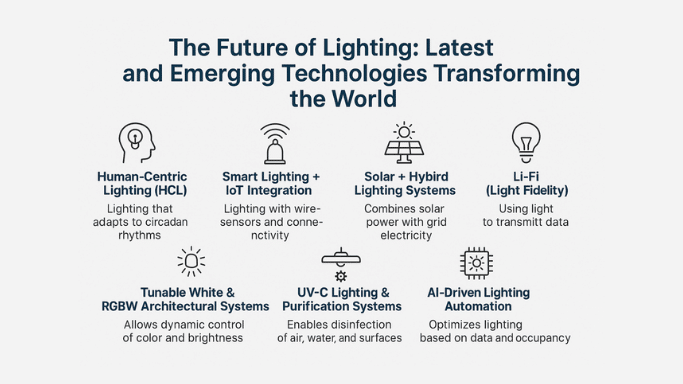
Infographic showing the latest and emerging lighting technologies including Human-Centric Lighting, IoT smart lighting, solar hybrid systems, Li-Fi, UV-C purification, tunable RGBW lighting and AI-driven automation.

The Future of Lighting: Latest and Emerging Technologies Transforming the World

Introduction Lighting is evolving faster than ever. Today, the future of lighting technologies directly impacts productivity, worker comfort, safety, and overall building performance. As industries move toward smart infrastructure, lighting is becoming a connected ecosystem rather than a simple utility.In the sections below, you’ll find the most important innovations shaping factories, warehouses, offices, and smart

The Future of Lighting: Latest and Emerging Technologies Transforming the World Read More »

Factory worker reviewing a thermal plan checklist with heat gauge and industrial buildings in the background, illustrating the importance of thermal planning for factories.

Why Your Factory Needs a Thermal Plan — And How to Build One Step-by-Step

Heat is one of the most ignored productivity killers on Indian shop floors. Most factories invest in machines, automation, energy-saving upgrades, and safety systems, but very few create a proper Factory Thermal Plan. A Thermal Plan is not only about cooling. It focuses on scientifically controlling heat so that workers, machines, and processes perform at

Why Your Factory Needs a Thermal Plan — And How to Build One Step-by-Step Read More »

Heat Index chart that shows how air temperature and relative humidity combine to affect how hot it feels

The Concept of Heat Index and ‘Felt Heat’ — Why Your Factory Feels Hotter Than It Is.

The concept of factory felt heat explains why workers feel hotter than what the actual thermometer shows. Even when your temperature reads 35°C, your workforce might be experiencing up to 42–53°C because felt heat is a combination of heat + humidity. This “felt temperature” has a direct impact on productivity, worker safety, and overall shop-floor

The Concept of Heat Index and ‘Felt Heat’ — Why Your Factory Feels Hotter Than It Is. Read More »

Poor Air Movement Across the Shop Floor

Why Your Factory Feels Hotter Than Outside — and How to Fix the Factory Heat Problem

Introduction: The Strange Case of “Hotter Inside Than Outside” Walk into your factory at 2 p.m., and you’ll often hear:“It’s hotter inside than outside!” And it’s true. Even when the outdoor temperature is 38°C, many shop floors reach 45–48°C.Machines may not have changed, but airflow, heat buildup, and radiant heat certainly have.  Let’s understand why this

Why Your Factory Feels Hotter Than Outside — and How to Fix the Factory Heat Problem Read More »

Inquire More
close slider

Inquire More

Your Name(Required)
Company Name(Required)

Scroll to Top