
 info@fstindia.in
Introduction
Lighting is evolving faster than ever. Today, the future of lighting technologies directly impacts productivity, worker comfort, safety, and overall building performance. As industries move toward smart infrastructure, lighting is becoming a connected ecosystem rather than a simple utility.
In the sections below, you’ll find the most important innovations shaping factories, warehouses, offices, and smart cities.
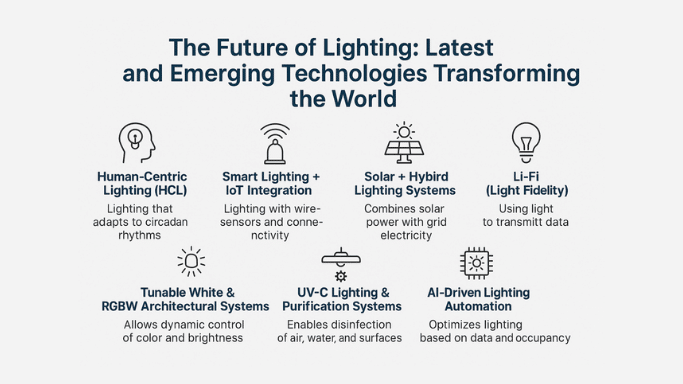
1. Human-Centric Lighting (HCL)
Human-Centric Lighting automatically mimics natural daylight. It adjusts color temperature, intensity, and spectrum throughout the day.
Key Benefits of HCL
Boosts worker alertness
Reduces fatigue
Supports night-shift sleep cycles
Enhances concentration and comfort
Because of these advantages, HCL is gaining popularity in manufacturing floors, control rooms, labs, and modern workplaces.
.
2. Smart Lighting with IoT Integration
Smart lighting uses sensors, wireless networks, and data analytics to improve building performance. These systems include motion sensors, Bluetooth Mesh or Zigbee connectivity, daylight harvesting, and predictive alerts.
Why IoT-Lighting Is Powerful
Smart lighting enables:
Real-time energy optimization
Asset tracking
Environmental monitoring
Occupancy-based automation
Enhanced safety
As a result, lighting becomes a communication network inside smart factories and commercial spaces.
3. Solar and Hybrid Lighting Systems
Solar-powered and hybrid lighting solutions are now essential for energy-efficient infrastructure.
Emerging Sustainable Lighting Models
Solar streetlights with LiFePO4 batteries
Hybrid indoor lighting (solar + grid)
Transparent photovoltaic glazing
Solar-integrated building façades
These technologies reduce electricity consumption and long-term operational costs.
4. Li-Fi (Light Fidelity)
Li-Fi uses LED light to transmit data at extremely high speeds. It avoids radio interference and provides secure communication.
Where Li-Fi Works Best
Hospitals
Aircraft cabins
High-security labs
Underground facilities
Since it provides stable, high-speed data, Li-Fi is ideal for sensitive environments.
5. Tunable White & RGBW Lighting
Modern buildings require adaptive ambience. Tunable lighting adjusts color temperature, brightness, and scenes based on mood or task.
Where Tunable Lighting Is Used
Retail showrooms
Hotels
Corporate offices
Industrial control rooms
This technology improves visual comfort and supports productivity.
6. UV-C Lighting & Purification
UV-C systems disinfect surfaces, purify air, and treat water.
AI-driven UV-C robots are already used in hospitals, food production, and clean manufacturing.
7. AI-Driven Lighting Automation
AI analyzes building activity and makes intelligent adjustments. It controls brightness, reduces energy waste, and plans maintenance cycles.
Because of its automation features, AI-lighting is becoming the default system for large industrial and commercial buildings.
Conclusion
The future of lighting technologies is efficient, connected, and human-focused. Whether you’re upgrading a shop floor or planning a smart warehouse, advanced lighting systems improve safety, productivity, sustainability, and cost efficiency.
Industries that adopt these lighting innovations early will gain long-term competitive advantages.
Elevate your infrastructure with next-generation lighting solutions. Partner with Five Star Technologies to enhance efficiency, safety, and energy performance across your facility.
